
Can You Recycle Garden Hose? (Smart Disposal Secrets!)
Most garden hoses are not recyclable through standard curbside programs because they are made of complex, mixed materials that tangle in sorting machinery. To handle an old hose sustainably, you should look into specialized drop-off centers or find creative ways to repurpose the material in your yard to keep it out of the landfill.
Every gardener knows that moment of frustration when you turn on the faucet only to find a massive, spraying leak in your trusty garden hose. Whether it has been chewed by a pet, run over by a lawnmower, or simply cracked from years of sitting in the harsh sun, a broken hose is a common headache.
Once the leaks start, you are left with a long, bulky piece of equipment that is no longer useful for watering plants. Naturally, the first thought that pops into your mind is, “Can you recycle garden hose?”
It is a great question to ask because we all want to be responsible stewards of our land. We spend so much time nurturing our soil and our flowers that the last thing we want to do is contribute to a landfill problem. Unfortunately, the answer to whether you can recycle garden hose items is not as simple as tossing them into your blue bin. In fact, doing so can actually cause significant operational issues for waste management facilities.
In this guide, we will explore exactly why these items are so tricky to process and what you can actually do with them. From understanding the chemistry of your hose to getting crafty with home repairs, we are going to walk through every option to ensure your old gardening tool gets a proper send-off that aligns with your eco-friendly goals.
Understanding Why You Cannot Recycle Garden Hose Materials Curbside
If you have ever peered into your recycling bin and wondered why certain plastics are accepted while others are rejected, you are looking at the “tanglers” rule. A garden hose is the textbook definition of a tangler in the recycling industry. When sorting machines run at high speeds, anything long and flexible—like a hose or an electrical cord can wrap itself around the spinning gears and belts.
The Danger of Tanglers
When a garden hose gets caught in a conveyor system, it creates a serious safety hazard and stops the entire production line. Workers have to manually cut the hose out of the machinery, which is time-consuming and dangerous.
Because of this, almost every recycling facility in the country has a strict policy: no garden hoses allowed in the standard collection bins. If you put them there, they almost certainly end up in the trash anyway, and you risk getting a fine from your local waste management provider.
The Problem with Mixed Materials
Beyond the physical danger to equipment, the chemical makeup of a garden hose is a hurdle. Many hoses are made from a combination of vinyl (PVC), rubber, and internal synthetic mesh. Some also feature lead or other chemicals to keep the plastic flexible.
Because these materials are fused together during manufacturing, it is technically impossible to separate them for recycling. Since recyclers generally look for pure streams of plastic, like high-density polyethylene, a complex composite hose does not fit the criteria for a recyclable product.
Creative Ways to Repurpose Your Old Garden Hose
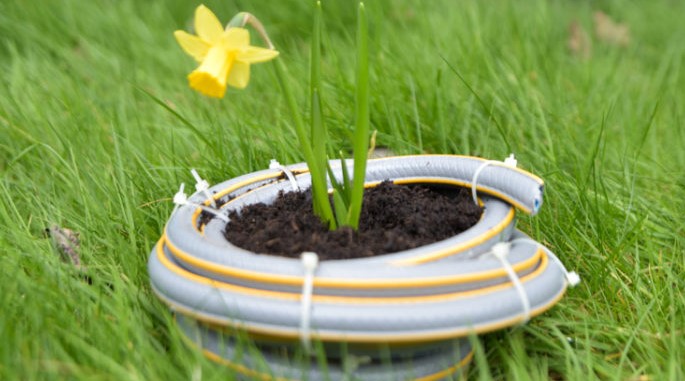
Just because you cannot recycle garden hose products in the conventional way does not mean they have to go to the trash. If you are a fan of upcycling, a broken hose is actually a goldmine of thick, durable material. Before you look for a dumpster, consider these practical ways to keep that material out of the landfill while making your gardening life easier.

Protective Edging for Garden Beds
If you have a sharp edge on a raised garden bed, a fence, or even a tool shed, a section of old hose can be a lifesaver. Simply slice the hose down its entire length with a utility knife. Once it is split, you can wrap it over the sharp edges of corrugated metal or wooden siding. It creates a soft, rounded buffer that prevents you from getting scratched while you work. It is an excellent way to organize your garden space while utilizing an item you would have otherwise discarded.
Custom Kneeling Pads
Kneeling on hard ground or gravel is brutal on the joints. If you have several small pieces of an old hose, you can create a custom kneeling pad. Lay the hose pieces side-by-side in a spiral or a straight block pattern and secure them together with zip ties or heavy-duty outdoor tape. This creates a flexible, cushioned surface that stays dry even on wet soil. It is a very durable solution that can last for years of heavy gardening use.
Tree Guards and Protection
Young trees are often vulnerable to damage from string trimmers or pests. You can protect the base of a young tree by wrapping a segment of your old hose around the trunk. If the hose is stiff, soak it in warm water or leave it in the sun for an hour to make it pliable. It acts as a perfect shield against accidental nicks from the lawnmower. Just remember to check it periodically to ensure the tree has room to grow as the trunk expands.
When You Can Actually Recycle Garden Hose Items
While you cannot recycle garden hose products through your neighborhood curb pickup, there are specific scenarios where recycling might still be possible. It takes a bit more effort on your part, but it is worth it if you are committed to the circular economy.

Finding Specialized Scrap Metal Recyclers
The metal ends (the male and female couplings) of your garden hose are made of brass or aluminum. These are high-value materials that recyclers love. If you take the time to cut off the metal fittings, you can often bring a bucket of these couplings to a local scrap metal yard. While the plastic tubing itself will still need to be handled, you are successfully ensuring that the metal parts are recycled properly rather than ending up in a landfill.
Manufacturer Take-Back Programs
Some eco-conscious companies are beginning to offer take-back programs for their products. While these are not universal, it is always worth checking the brand of your hose. Visit the manufacturer’s website to see if they have a dedicated channel for recycling old equipment.
Some brands are beginning to use recycled content in their new products, and they may have the facilities to process old, damaged lines back into their manufacturing stream.
Tips for Extending the Life of Your Garden Hose
Of course, the best way to deal with an old hose is to prevent it from getting old in the first place. You can recycle garden hose worries entirely by practicing good maintenance. A little bit of care goes a long way in keeping your tools functional for years, which is the most sustainable choice you can make.

Proper Storage is Key
The biggest enemy of a garden hose is the sun. Ultraviolet light breaks down the plastic over time, leading to cracks and leaks. Never leave your hose lying on the driveway or out in the middle of the lawn after you are done watering. Always coil it neatly and hang it on a hose reel or a storage hook, ideally in a shaded area of your garage or shed.
Avoid Sharp Kinks and Pressure
Kinks are the primary cause of internal hose failure. When water is running, a kink creates a sudden pressure buildup that can rupture the inner lining of the hose. Always uncoil the hose completely before you turn on the water.
When you are finished, ensure the water is fully drained before you store it away. If you live in a cold climate, make sure to drain your hoses completely before the first frost, as ice expanding inside the hose will cause it to split open during the winter.
Donation: Give Your Hose a Second Life
Sometimes, what you perceive as a broken hose is perfectly fine for someone else’s needs. If your hose has a small leak at one end, but the rest is intact, you can cut off the bad section and install a new brass repair coupling. If you don’t want to fix it, consider donating it to someone who might.
Helping Community Projects
Community gardens and local gardening clubs often deal with tight budgets. They are frequently looking for donated supplies. A hose that has a small leak might be perfectly fine for someone who needs to move water across a path without high pressure, or who doesn’t mind a little bit of dripping.
Always mention the leak when you donate, but don’t assume the tool is useless just because it no longer meets your personal needs for a perfect, pressure-tight connection.
Animal Shelters and Farms
Small hobby farms and animal shelters often have different requirements than home gardeners. They might use hoses for cleaning stalls or filling water troughs where a leak at the end of the hose doesn’t matter at all. Giving these organizations a call can be a great way to find a second life for your equipment and keep it out of the waste stream for a little longer.
Moving Toward a Greener Gardening Future
So, to answer the big question again: Can you recycle garden hose products easily? No, but you have options. We are moving toward a future where more products are designed with circularity in mind, but for now, the onus is on us as gardeners to handle our waste thoughtfully.
By understanding that these items don’t belong in the blue bin, we protect the systems that do work and we keep our facilities running safely. Whenever possible, choose high-quality hoses that come with warranties. Many premium brands offer “lifetime” guarantees. While these might cost more upfront, they reduce the amount of waste you generate over time.
Plus, many of these companies will send you a replacement hose if yours fails, and they often handle the disposal of the old one for you. This is the gold standard for sustainable gardening.
Ultimately, your old garden hose is not just trash; it is a resource. Whether you turn it into a tree guard, donate it to a community project, or salvage the metal fittings, you are taking an active role in sustainable living. Keep your garden beautiful, keep your conscience clean, and remember that with a little creativity, there is almost always a better option than the landfill.
Frequently Asked Questions
Why can’t I put my garden hose in my blue recycling bin?
Garden hoses are considered “tanglers” that wrap around and break the expensive sorting equipment at recycling facilities. Because of this, they are strictly prohibited in curbside programs to prevent dangerous mechanical failures.
Can I donate a used garden hose that has a leak?
Yes, many community gardens or animal shelters will gladly accept hoses that have minor leaks for tasks where full pressure is not required. It is always best to let the recipient know exactly what is wrong with the item so they can determine if it suits their specific needs.
Are there any companies that offer hose recycling?
Some manufacturers have started sustainability initiatives or take-back programs for their products, so it is worth checking the brand’s website. While these programs are not yet universal, some companies may offer guidance on how to responsibly dispose of their specific hose models.
What should I do with the metal fittings on my hose?
The brass or aluminum couplings at the ends of your hose are valuable scrap metal. You can cut these off and take them to a local metal recycling center where they can be properly processed and reused.
How can I repurpose a hose in my garden?
You can turn old hoses into protective edging for sharp corners, create cushioned kneeling pads, or wrap segments around young tree trunks to protect them from lawnmowers. These projects are simple, effective, and keep the material out of the trash.
Why is it so hard to recycle plastic hoses?
Hoses are made of composite materials like vinyl, rubber, and synthetic mesh that are fused together. This complexity makes it technically and economically impossible for recycling facilities to separate the components, which is required to process the plastic effectively.


